Collectages

Recordings of Foods & A®titudes

Collectages header image 1

Oeufs Soufflés & Concert Drawings Series

March 15th, 2010 · No Comments

The bok choy in the fridge was calling for immediate attention. As it was Sunday and brunch time I felt like something a little more festive than bok choy and rice! Some sort of a soufflé came to mind. I preheated the oven to 375º. I sliced the bok choy vertically into 6 sections, then braised it in a mix of butter and olive oil with 2 cloves of minced garlic. While that was cooking, oeufI separated 5 eggs — yokes in one bowl and whites in an other. Pierre grated 1 cup of various cheeses he found in the cheese box. I whipped the egg whites very firm. Mixed the cheese with the previously beaten egg yolks, and added salt, pepper and nutmeg. Now folded half of the egg whites in the egg yolk + cheese mixture, then folded in the second half of  egg whites. Poured the mixture over the braised bok choy and put it into the oven for ?…sorry I didn’t look at the time — at some point I just felt it was done and it was! But it cannot be more that 15/20 minutes. This doesn’t come out as a real high soufflé but again I call it oeufs soufflés — not “SOUFFLAY”! It is very  good simple and stress free, unlike soufflay can be!

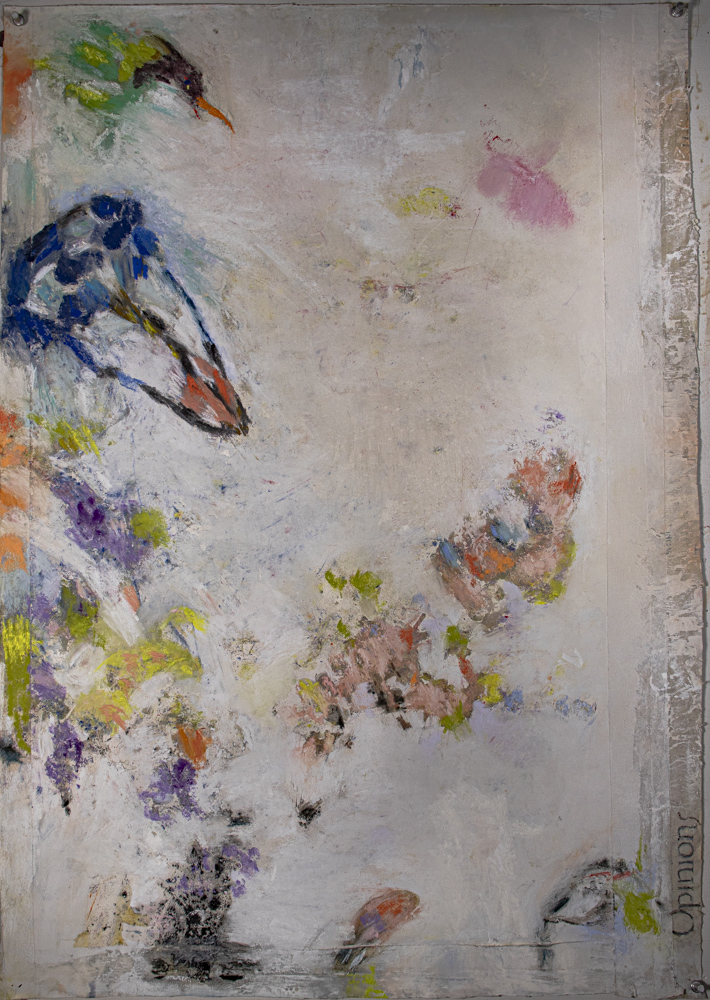
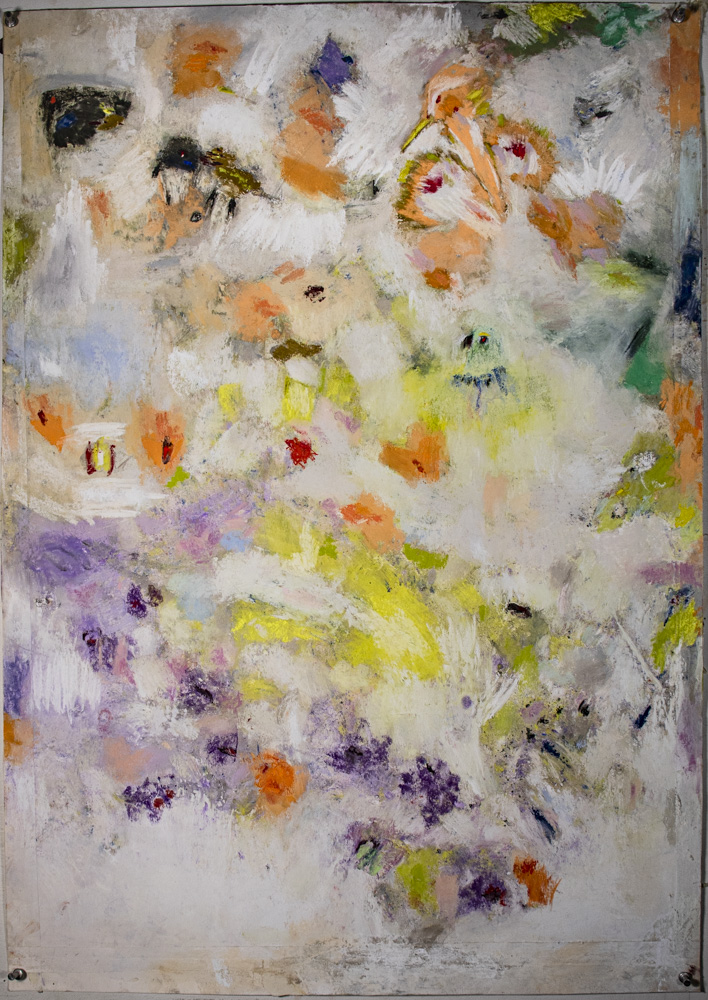
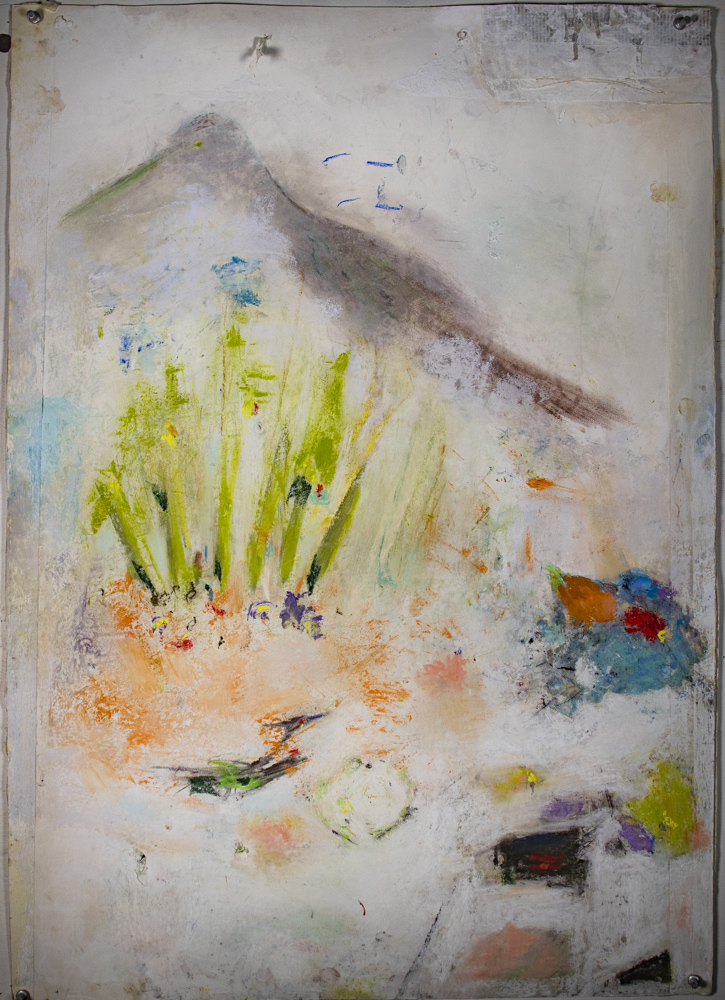
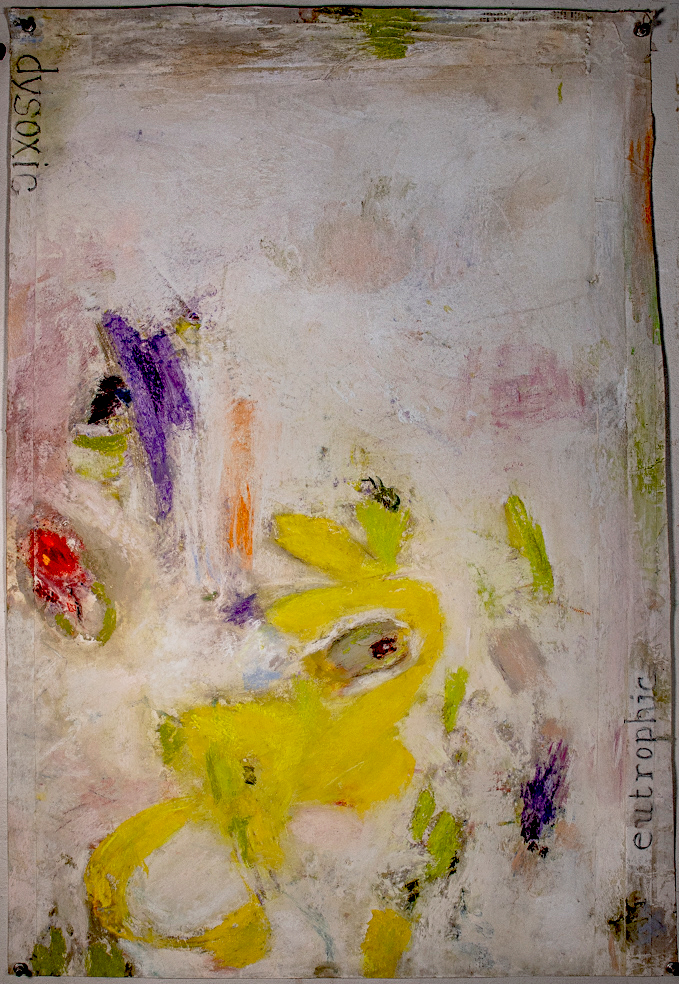
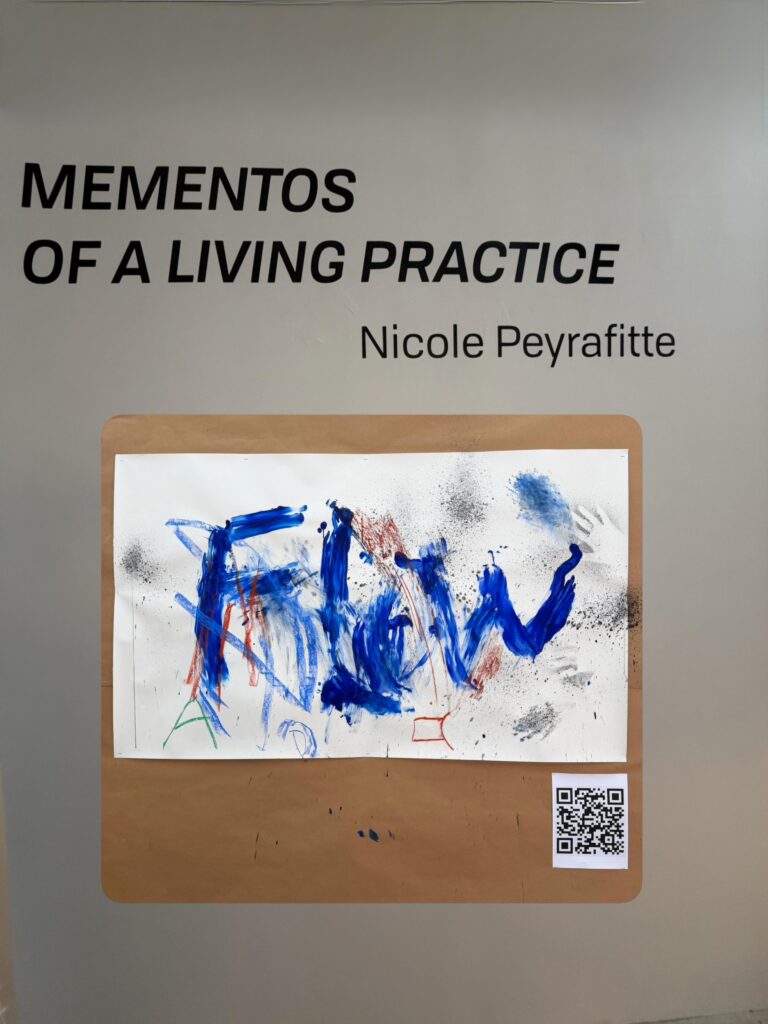
Another thing I have been doing is to keep a better record of the drawings I make at events — especially at concerts. Below are a few of the “blind” concert series drawings. I draw (almost) without  looking a the page and let eye and rhythm guide the hand. I also do take some notes on the back for possible later poems.

The Bill Frisell Series
Concert at Blue Note on February 28th 2010: Bill Frisell with Paul Motian and Ron Carter. This is a summing up of the note I sent to my friend Steve Dalachinski after the  concert:

..loved the set they played
it was very bare and beautiful
very essential, not too many notes!
so delicate…
carter seems to have difficulty breathing,
motian was doing his thing very well while frisell was carefully and tactfully tying and lifting them up…
it works better for some songs than others but overall it really did and it filled my soul.
also it was my first time seeing them live and i just couldn’t get my
eyes off carter’s fingers… so loooong, so square… a giant’s hand! and
the way he uses them on the bass…..

The Matthew Shipp Series:
This concert was yesterday, Sunday March 14th, at Gathering of The Tribes, that is Steve Cannon’s magical place. We gathered at 5:00 PM and the concert started at 5:30PM with as an opening surprise a short snippet featuring the Nicholas’ brothers —see video below– from the 1943 movie Stormy Weather. Though it happens in a liminal time and space, the connections between  Matt Shipp and the Nicholas’ brothers reveal immanent evidences. Matt Shipp’s dexterity, agility and  feline playing has the same mesmerizing quality as the brothers’ dancing. I didn’t time the concert but my attention didn’t drop or drift for a single minute. Matt takes us onto a musical journey that deliberately references several genres played at once with a sheer emotional clarity that can make you laugh or cry and even laugh & cry at once. At some moments it felt like he was channeling Satie & Bach playing Fly me to the Moon together! One of my favorite Shipp recordings is on his latest CD 4D. It takes the old repetitive (stupid) French song Frère Jacques and manages to turn it into an obsessive frightening dramatic Hitchcockian episode.
Voilà! If you want to see the drawings at a better resolution just click on them.

→ No CommentsTags: Food Sources · French Food · Live Shows · Paintings/Drawings · Recipes

Healthy Martini!

March 14th, 2010 · 3 Comments

Healthy Martini

I don’t really complain about the weather, except maybe in the summer when it is really hot and humid  — and that’s when I escape to my native Pyrenees where it’s mosquito free & cool. I like cold weather, I like the snow, I like the rain, I’m scared of the wind but love it, I even like the fog —but not when I have to drive, &  like everybody else I like the sunshine! I think we get the weather we deserve, and we can’t change the weather… I have but it is hard!

Today was definitely a day I was happy not to have to leave the house. It was stormy on the Narrows and it would have taken a serious effort to stay dry and warm outside — and too big of an undertaking to try to change it! I stayed home, got some reading done for the Augustus Saint Gaudens project, cooked food — I will report on that later — watch the “try-less” Six Nation Rugby game between Scotland & England (13-13) and helped Pierre fight the nasty cold that had been attacking him. We did a lot of homeopathic remedies and at around 6pm it was time to get him a good dose of vitamin C since he forgot to take them this morning…that is when I though of an healthy martini!

The first time I had a vodka martini with fresh grape fruit juice was at the Algonquin Hotel lounge where I was hoping to see Matilda the famous resident cat.  “The Hemingway” ($18):  Ketel One, Fresh Squeezed Ruby Red Grapefruit, Simple Syrup, Sugar Rim (good, but too sweet for my taste.) I sipped it very slowly ($18!)  waiting for the cat to grace me with an appearance but she didn’t. Maybe she was dinning on premium scraps? something like wild salmon or foie gras left overs? Anyway, next time I will try to email her first, as her email are read to her on a daily basis.

All that to say that today was the day to make my version of “The Hemingway” and give it another name — please no offense to the Hemingway aficionados— I call it “Healthy Martini”: 1/2 Stoli, 1/2 Fresh Squeezed Ruby Red Grapefruit, a dash of Cointreau, in the shaker. So good, so satisfying, so healthy, it brings instant sunshine, inside and outside, guaranteed! Try it.

→ 3 CommentsTags: Algonquin · Cocktail · Manhattan

Ninkasi: “The Lady who fills the Mouth”

March 10th, 2010 · No Comments

nin (lady)                                         kag (mouth)

I was really looking forward to be part of  “Tasting and Exploration of Yeast Culture,” an event part of the Umami Festival at the Astor Center on Friday March 12, but it just got canceled by the organizers. C’est la vie! — and it gave me the great opportunity to explore yeast, and more specifically beer & bread in Sumerian culture. As I will not be able to perform for you this time I will share my collectages on the topic.

As recorded today it looks like it is Sumer and not Egypt that would be the oldest beer producing country and the oldest beer goddess thus would be Ninkasi. She is the ancient Sumerian Goddess of intoxicating beverages, her name meaning: “ the Lady who fills the mouth”

Her father is Enki the lord Nudimmud and her mother is Ninti —or Ninursag —Queen of the Abzu. Ninkasi was one of the eight children created to heal the eight wounds of her father Enki; wounds received by eating eight forbidden plants.

Beer/Kaš Gar/Bread

So what came first: the kaš/beer (left) or the gar/bread (right)? Hard to say, but what we can read in the text below is that the bappir, that is the twice baked barley bread was stored for the purpose of beer brewing, and there are indications that it could have been eaten. It has also been suggested that the bappir could be an early form of biscotti (twice baked).

The 2800 BC hymn to Ninkasi is a fairly linear description of brewing techniques. You can  read the scholarly translation here and if you are a Sumerian scholar the transliteration here. And voilà the arrangement I made for performance purpose:

Borne of flowing water ……, tenderly cared for by Ninḫursaĝa!
Ninkasi, borne of flowing water ……, tenderly cared for by Ninḫursaĝa!

Your father is Enki, Lord Nudimmud, your mother is Ninti, the queen of the abzu.
Ninkasi, your father is Enki, Lord Nudimmud, and your mother is Ninti, the queen of the abzu.

It is you who handle the dough with a big shovel, mix the bappir in a pit, with sweet aromatics.
Ninkasi, it is you who handle the dough with a big shovel, mix the bappir in a pit, with sweet aromatics.

It is you who bake the bappir in the big oven, and put in order the piles of hulled grain. Ninkasi, it is you who bake the bappir in the big oven, and put in order the piles of hulled grain.

It is you who water the earth-covered malt; the noble dogs guard it even from the potentates.
Ninkasi, it is you who water the earth-covered malt; the noble dogs guard it even from the potentates.

It is you who soak the malt in a jar; the waves rise, the waves fall.
Ninkasi, it is you who soak the malt in a jar; the waves rise, the waves fall.

It is you who spread the cooked mash on large reed mats; coolness overcomes …….
Ninkasi, it is you who spread the cooked mash on large reed mats; coolness overcomes …….

It is you who hold with both hands the great sweet wort, brewing it with honey and wine.
Ninkasi, it is you who hold with both hands the great sweet wort, brewing it with honey and wine.

It is you who place the gakkul vat, which makes a pleasant sound, on top of a large lamsare vat.
Ninkasi, It is you who place the
gakkul vat, which makes a pleasant sound, on top of a large lamsare vat.

It is you who pour out the filtered beer of the lamsare vat; it is like the onrush of the Tigris and the Euphrates.
Ninkasi, it is you who pour out the filtered beer of the
lamsare vat; it is like the onrush of the Tigris and the Euphrates.

There was also Sumerian proverbs related to drinking  :

“Ce qui est bon, c’est la bière! Ce qui est mauvais, c’est la route!”
What’s good is the beer! What’s bad is the road!


Beer drinking in Mesopotamia- Always with straws which could mean that the beverage was not  clear and needed to be sifted.

Another great song I came across is  the oldest recorded drinking song!  The found tablet is believed to have been written at the turn of the III to II millennium BC and was first studied in 1964 by Miguel Civil. (right: illustration is the Ninkasi seal)

Ninkasi Seal

translation: here
transliteration:  here

Performance version:

The gakkul vat, the gakkul vat!
The gakkul vat, the lamsare vat!
The gakkul vat,  puts us in a happy mood!
The lamsare vat,  makes our heart rejoice!
The ugurbal jar, glory of the house!
The šaggub jar, filled with beer!
The amam jar, carries the beer from the lamsare vat!
The troughs made with bur grass and the pails for kneading the dough!

All the beautiful vessels are ready on their pot stands!
May the heart of your god be well disposed towards you!
Let the eye of the gakkul vat be our eye, and let the heart of the gakkul vat be our heart!
What makes your heart feel wonderful in itself also makes our hearts feel wonderful in themselves!
We are in a happy mood, our hearts are joyful!
You have poured a libation over the fated brick, and you have laid the foundations in peace and prosperity — now may Ninkasi dwell with you!
She should pour beer and wine for you!
Let the pouring of the sweet liquor resound pleasantly for you!

In the troughs made with bur grass, there is sweet beer.
I will have the cup-bearers, the boys and the brewers stand by.
As I spin around the lake of beer, while feeling wonderful, feeling wonderful, while drinking beer, in a blissful mood, while drinking alcohol and feeling exhilarated, with joy in the heart and a contented liver — my heart is a heart filled with joy!
I clothe my contented liver in a garment fit for a queen!
The heart of Inana is happy once again; the heart of Inana is happy once again!

A …… to Ninkasi.

The code of Hammurabi, inscribed on a basalt tablet, lays down some strict rules for the administration of beer parlors. Owners who overcharged customers were liable to death by drowning!

These pieces will be a great addition to my Sumerian repertoire, they will complement the Incantation of Innana that I have been performing for years (on my cd La Garbure Transcontinentale-The Bi-Continental Chowder). Below is a live performance of that piece for the celebration of Jerry Rothenberg’s anthology Technicians of the Sacred.  This is how I got introduced to Sumerian poetry. Merci Jerry!


Bibliography:
The Electronic Text Corpus of Sumerian Literature

Sumerian Mythology
by  Samuel Noah Kramer
La Plus Vieille Cuisine du Monde
by Jean Bottéro
Lorsque les dieux faisaient l’homme
Jean Bottéro & Noah Kramer
Food in History
by Reay Tannahill
A history of beer and brewing by Ian Spencer Hornsey

Thanks to Ame Gilbert & Yael Raviv

→ No CommentsTags: Food History · Food Sources · Other Foods · Songs

March, march, march…

March 6th, 2010 · No Comments

MARCH—collage/drawing from N.P.  Calendar Series

Yeap! We are in March and I saw some crocuses “piercing” the ground on 71st street yesterday. It cheered me up. The general mood has been down with all the international and national events, catastrophes, health care mess… Even my hometown, Luchon, was seriously affected by a storm coming from the Southwest with winds at 200km/h. It killed one man, pulled out thousands of ancient trees, lifting roofs, and closing bars for one day! No one remembers seeing or hearing about such an event in a place that is so naturally sheltered from the wind. Who says there is no global warming? The same idiots who feel threatened by universal health care? The same idiots who worship a god that knows neither nature nor health. We need D.A Bennett  The Truth Seeker all over again, I just read that book and it is amazing how the problem of religion in politics has remained the same for two century ago and is far from being solved.

Anyhow, life must go on and I have been busy. The “d’Artagnan 25th Anniversary Art Show” at The World Bar is still on. Works by French painter Michel Calvet and 3 large collage/paintings of mine are on display.  The World Bar serves delicious cocktails and their $8 happy hour special is totally worth it. I had a “peace cocktail” concocted by the excellent (1/2 french) mixologist Jonathan, all fresh juices and premium liquors — a real treat! We will have another event there soon as the opening was affected by the storm. So don’t feel bad if you couldn’t make it; D’Artagan has agreed to provide us with more patés and saucisson for another event, so stay tune!

Below you will find my detailed calendar of events for March, four events still coming up, it is all exciting especially the Umami festival one, which is leading me into fascinating research about yeast and beer in Mesopotamian time. As a result of all this action the fridge as been consistently empty and home made Miso soup (see recipe here)and rice has become a staple.

Breakfast Rice

I cook two cups of brown rice twice a week and eat it in different forms. The breakfast version is becoming a house favorite and even Pierre who is not a brown rice aficionado really likes this one:

-Warm up some rice milk in a bottom of sauce pan. Add 1/2 cup of cooked rice per person, one small apple cut into small pieces, 1/2 banana, raisins, cranberries, goji berries, maple syrup. Just warm it up. Before serving add chopped roasted almonds, pistachios, walnuts. That’s a tasty healthy breakfast!

Chicken

When we finally made it to the coop a few days ago we got the making for a chicken soup. I had been craving it since Dawn Clements (now showing an amazing piece at the Whitney Biennial click here) served me the most delicious one at her studio in early February.  That recipe is also very easy:  throw it all in the pot and let it happen while the smell of the broth takes over the house. This is what I threw in the pot of cold water:
-1 organic chicken (with feet!)
-3 celery ribs
-3 carrots peeled and cut
-2 “fanned” leeks
-1 onion with 3 cloves planted in it
- 1 spice/herb bag with: fresh parsley, thyme, laurel leave, 1 cardamon pod, 6 blk pepper corn.
- Sea salt.
Then you can either delicately lift some of the meat and eat it separately or debone  the whole thing and return it in the pot. You will have to add some salt and pepper to taste and you can of course add some pasta or rice or potatoes. I just had a bowl and this is ever so restauring and satisfying.

Now the schedule and if I don’t see you there, please stay in touch!

Sunday March 7th
Sunday Best Reading Series
4PM $7
The Lounge, Hudson View Gardens
Pinehurst Avenue and 183rd Street
183rd & Pinehurst Avenue
New York City

Friday March 12th
UMAMI Festival
Featuring Sarah Klein, Murray’s Cheese, Tom Cat Bakery, Ithaca Beer Company
& NP w/ Rosie Hertlein ( violin)
6:30PM
click here for
reservations
Astor Center for Food and Wine
399 Lafayette (at 4th Street)

Sunday March 21
NP & Pierre Joris, Nick Flynn, Major Jackson, Douglas Unger
6PM
Poets for Peace at Erika’s
85-101 N. 3rd St # 508
Brooklyn, NY 11211
(between wythe and berry
and it is the bedford stop on the L train)

Monday March 29th
NP w/ Pierre Joris & Michael Bisio (bass)
THE LOCAL 269

269 E Houston Street NYC

Ongoing until Agust 2010
D’Artagnan 25th Anniversary Art Show
Michel Calvet / Nicole Peyrafitte / Jean-Pierre Rives
The World Bar /The Trump Tower
845 United Nation Plaza
New York NY 10017


→ No CommentsTags: Bay Ridge · Breakfast · Food Sources · Live Shows · Luchon/Bourg d'Oueil · Manhattan · My Fast Food · Paintings/Drawings · Poetry · Recipes

The D’Artagnan 25th Anniversary Art Show

February 20th, 2010 · 4 Comments

Wow! Since I returned from Chicago I have not had a chance to post to the blog. It has been insanely busy:

There is the ongoing work on Augustus Saint Gaudens with the documentary script writing advancing slowly but steadily.  I am trying  to clarify some aspects of his father’s life —Bernard Saint-Gaudens— in their early years in NYC. It is quite fascinating to dig into the history of this period and  discover that there was a lot of French political immigrants in NYC. They all mingled at a German tavern called Pfaff’s. I found some evidence that Bernard was among the patrons. A famous client of Pfaff’s was Walt Whitman! Chances are the two men crossed paths. Now that is exciting to me! But this week I had to put Augustus and Bernard on the back burner as I prepared to hang a painting show for the D’Artagnan 25th Anniversary Art Show.

Ariane Daguin, president of D’Artagan, is celebrating the 25th Anniversary of her company and it is quite a grand affair. 200 native Gascons have flown over the Atlantic to assist in the celebration.  It all started by a beret toss contest on 14th street an 9th Ave on Thursday at noon. The passersby had never seen such an event. Two festive bands —we call them bandas in the south of France— animated the competition. I was proud to participate and tossed my beret really far …we all took gold, silver and bronze and that was a glass of delicious and crisp Colombelle white wine, tasty Saucisson & hearty paté — provided by d’Artagnan, of course! Ariane and her company have brought a whole new line of food products to the American table. In many ways she is a role model both as a friend and as an entrepreneur.


Photo 1: Nicole tossing the beret.
Photo 2: Ariane Daguin directing the strict contest sponsored by Saint Mont Wine

I can’t really get into the details of all the events, but the one I am most involved with is the art show. I am honored to be one of the Three Gascon Musketeers of Art picked by Ariane. I am also honored to show in the company of celebrated sculptor and rugby player Jean-Pierre Rives and famous Toulousain painter Michel Calvet.  I will show large canvases that have never been exhibited in the US before. I  hope to see you at the public opening on Tuesday February 23rd from 5-7 pm at:

The Musketeers Are Coming!
D’Artagnan 25th Anniversary Art Exhibition

You are cordially invited to a reception with the Gascon artists
Michel Calvet Nicole Peyrafitte Jean-Pierre Rives

TUESDAY FEBRUARY 23
5:00 PM until 7:00 PM
at
THE WORLD BAR (reception)
& DAG HAMMARSKÖLD PLAZA

Complementary appetizers by d’Artagnan & Cash bar

MICHEL CALVET & NICOLE PEYRAFITTE PAINTINGS AT:
WORLD BAR AT THE TRUMP WORLD TOWER
NEW YORK CITY’S PREMIER INTERNATIONAL COCKTAIL LOUNGE
845 United Nations Plaza
New York, NY 10017

JEAN-PIERRE RIVES SCULPTURE:
DAG HAMMARSKÖLD PLAZA, Sculpture Platform
“THE GATEWAY TO THE UNITED NATIONS”
47th Street and Second Avenue, South East Corner

Michel Calvet

Nicole Peyrafitte

Jean-Pierre Rives

MERCI ARIANE AND D’ARTAGNAN
“UN POUR TOUS, TOUS POUR UN!”

→ 4 CommentsTags: Food Sources · Gasconha/Occitania · Live Shows · Manhattan · News · Paintings/Drawings

Shikaakwa City Report

February 7th, 2010 · No Comments

Logan Stepping on the City
From the Logan Monument

I am back from Shikaakwa or ” Stinky Onion” or as we call it today Chicago. The name Chicago is believed to be the French deformation of what the Miami-Illinois called the wild onion growing along the Chicago River. As expected, the weather was cold but I was prepared for it and it didn’t bother me a bit, au contraire. I convinced — or rather lured— Pierre into some mega walks along Lake Michigan. He didn’t regret it. As for me, they:

npchicago

Impress memory

North Shore:
Sky    water    cityscape

Jade   turquoise   mauve-gold

Lincoln walking from his chair
Meeting with Schiller
Three mermaid boys & three cranes
at the Bates Fountain

Mist moist lost
Urbs in Horto

Tropical gardens?

npchicago

Town Shore:
Mi’kmaq memoirs
Abby
tethered sways
Rippled reflections
Magalie’s fluo yellow
That’s a wake up call
Logan rears up
Lincoln sits down
Vulva building opens
To sharp German poetry.

South Shore:npchicago
Ice   ducks   republic
Gris    black & white    gold again
Rounds  & sharps
Ice creaks   ducks call
Republic alone
Fathoms the White City
No looking back at plastered Beaux Arts
Or Palace of Fine Arts
Science and Industry to prevail?

*  *  *  *

npchicago

We had a marvelous dinner at Turquoise, a Turkish restaurant in Roscoe Village. Both my Patlicanli Islim Sarmasi  ­—Braised lamb shoulder wrapped in eggplant and lamb jus, and rice pilaf ($ 17.95) and Pierre’s Kusu Sis Kepab —Lamb seasoned, skewered , grilled, served with vegetables, rice pilaf, and yogurt sauce ($ 17.95) were exquisite. A delicate tomato sauce topped the skillfully folded and perfectly cooked eggplant filled with fragrant marinated morsels of tender lamb. The rice pilaf was fluffy and buttery. Pierre’s kepab was equally perfect. Upon arrival we were offered delicious home baked bread with a complementary plate of what I think was Patlican salatisi —Smoked eggplant, garlic, olive oil, lemon juice, scallion and roasted red bell pepper. We were also offered each a Kazandibi — Caramelized butter, sugar and custard served with vanilla ice cream as a complementary dessert. We sat at the bar to catch the end of the Football game and Pierre ordered a Raki; it turned out to be on the house as we were the last ones and the register closed! Never had I experienced such generosity on visiting a restaurant for the first time.

After the wonderful bilingual Chicago Review reading at the Goethe Institute of Berlin poets —Christian Hawkey, Uljana Wolf & Monika Rinck — we had a good meal at the Armenian restaurant Sayat Nova. After Pierre’s reading at the School of the Art Institute of Chicago we had a not so good meal at The Italian Village but the company was beautiful & the conversation with poets Jennifer Scapettone, Natanaëlle (Nathalie) Stephens, Dan Godston & Jennifer Karmin very inspiring, so it didn’t matter. Dan, Jennifer, Pierre and I had a cozy nightcap at South Water Kitchen where we returned the next day for a light dinner before taking the train back to NYC.  There was also the rowdier night with Magalie Guérin a lovely French-Canadian painter. Magalie led the way to a bar/restaurant tour that began for cocktails at the Palmer House, to a fair Japanese restaurant  & to end with night cap at a Bar called Exchequer where we spent time trying to befriend a fierce Lithuanian waitress and comparing our accents!

*  *  *  *

npchicagoOn our first night in town we walked by the symphony hall and noticed that Pierre Boulez was conducting one of his 85th birthday concerts. We walked to the box office and got lucky enough to grab 2 of the last tickets! Watching Pierre Boulez conduct the orchestra is mesmerizing;  so elegant, so minimal I would dare to say almost liminal. The offering started with his own composition Livre pour Cordes, followed by Bartók’s Concerto for Two Pianos, Percussion and Orchestra and Stravinsky’ s The Firebird as the last piece. We read in the program that two nights later The Chicago Art Institute  presented a  Conversation with Maestro Boulez. “Mr. Bulless” —as the attendant who sold Pierre tickets called him— was reflecting on modernism with Phillip Husher, the CSO program annotator. Here are just a few of the notes I took during the talk:

— Importance to enhanced self teaching.
— The first “modern” composer was Beethoven.
— Paul Klee’s book on the Bauhaus lectures has been essential to his development.

—”Without Teleman I can live. Without Bach I cannot” —

*  *  *  *


And last but not least were my extended visits to the Art Institute & library educating myself in XIXe century sculpture and architecture with a focus on Augustus Saint Gaudens (1848-1907). The museum collection is a great place for me to absorb and contextualize the works by and information on his predecessors & contemporaries. The Art Institute owns beautiful ASG works, among them his bas-reliefs of Violet Sargent, Jules Bastien-Lepage & Amor Caritas.  There are also four of his major public art pieces in Chicago:
Lincoln Park: The Standing Lincoln  & The Bates Fountain —on the last one he collaborated with his former pupil Frederick MacMonnies.
Grant Park: The Seated Lincoln —behind the Art Institute—
The General Logan Memorial —Michigan Ave & 9th Street—

An other important fact is that Augustus Saint Gaudens was advisor on sculpture for the 1893 Chicago World’s Fair —a.k.a The World’s Columbian Exposition or encore, The White City. He didn’t make any special work for the exposition but the first Diana that had been too big for the top of Madison Square Garden II found a home on top of the Agriculture Building designed by McKim, Mead & White.

The first version of Saint-Gaudens’ Diana is on top of the Agriculture Building, left.

Voilà the report for the Chicago trip. The train ride in the roomette was wonderful, we had no delays and the food was totally acceptable. I loved the interaction with the train personnel. The one thing I really dislike is the toilet in the roomette. That is the silliest invention ever, I would much prefer to have more space and a public john in the corridor. There would be many other observation to report but that will have to be  for another post. Thanks to all the welcoming people we met, hope to come back soon!


→ No CommentsTags: Food Sources · Live Shows · Poetry · Travel · Walks

Abstractions & Voyage

January 21st, 2010 · No Comments

Georgia O’Keeffe, Series I—No. I, 1918. Oil on composition board, 19 3/4 × 16 in. (50.2 × 40.6 cm). Amon Carter Museum, Fort Worth, Texas. Purchase with assistance from the Anne Burnett Tandy Accessions Fund 1995.8. © Georgia O’Keeffe Museum/Artist Rights Society (ARS), New York.

Pierre and I are en route to Chicago. We will take the train tomorrow and we have reserved a “roomette”, that is a sleeping car for two with all meals included.  It is our 2oth anniversary and as we  both have work to do in Chicago (see the announcement for Pierre Joris’ reading at the end of the post) we decided that 40 hours of confinement —that is if there are no delays— will be  ideal to enjoy…or test our relationship!
More recipes and food reports will come soon. Meanwhile I am leaving you with a poem I wrote after a very inspiring visit to the Georgia O’Keefe: Abstraction show at the Whitney Museum. The piece was written using some titles of the paintings and a few lines from the Sarabeth’s advertisement brochure I had picked up at the coat check and used as a note pad. I read it at the Bowery Poetry Club on Sunday and you can read and hear it below. Voilà for now and off to the windy city!

Click here to hear the recording

January 7th, 2010 —
For & W/ Georgia O’Keeffe
By Nicole Peyrafitte

Inside a clam shell
In the evening
Clam shell again
Painted and pungent
Red Black & Night

Black place #1
Black place #2
Black place #3

A wonderful redefinition
Of yellow sweet peas
An impressive wave
In the pool
In the woods
In lake George
Pink & green

Alligator pears
Shipped to Alaska
Red & pink
Ballet skirt or
Electric light
We will not be responsible
For black abstraction

At the rodeo
Music pink & blue #2
On Wednesdays only
A train
At night
In the desert
Black white & blues

The touchstone; a portrait
Or jack in the pulpit
A piece of wood
Sandwiches, snacks, pastries, muffins
Coffee and desserts
All above the clouds in 1963
Special
Very special

Special #8
Special #12
Special #17

A tent door
At night
Everything she created
Blue & green
Though pelvis series
Red & yellow
Watch for the opening
My last door
Black door
With red
Yolk like
Ever morphing feelings
Cosmic walk
On
An
Untitled red wave
Eggshell abstraction with
Circle

———————————————————————————

For your information:
Pierre Joris’ reading in Chicago :
Chi Reading
Fri Jan 29 5:30pm

map

Joan Flasch Artists Book Center on the SAIC ‘campus,’
School of the Art Institute of Chicago
37 South Wabash Avenue, Chicago, IL -
(312) 899-5170

→ No CommentsTags: Food Sources · Manhattan · Nicole's Writings · Paintings/Drawings · Poetry · Travel

Lo Magret goes to Paris!

January 12th, 2010 · 7 Comments

André Daguin, chef/owner of the Hôtel de France in Auch (Gers) until 1997, tells how he gave a new life to the tasty magret de canard — and made it famous in the process:

magret

“The magret was served only as “confit” in soups, cassoulets and everyone would find it dry. The only way to avoid that was to cook it less, but no one dared. I had arguments with my customers; they couldn’t believe it was duck meat! Bob Daley, the New York Times journalist, reported on the discovery of this ‘new’ meat.”

In Occitan-Gascon the word magret —from the latin magre, literally means “lean”. It is definitely the leanest piece of the canard gras — that is the fattened moulard duck raised for foie gras. To make moulard ducks fat, force-feeding is required for a few weeks.

A bas relief depiction of overfeeding geese

This ancient technique seems to be referenced as far back as the 5th century BC. The Moulard duck is a hybrid cross of Pekin and Muscovy duck. Do not confuse Moulard with the very lean wild Mallard duck.

magret

The magret is the breast that is detached from the carcass once the liver had carefully being extracted. In the canard gras nothing goes to waste. The skin is rendered for fat; the fat is then used to simmer the legs and manchons (wings). Once cooked this meat is known as le confit. Le confit is then stored in earthenware pots, covered with fat to seal it, and used throughout the winter in various preparations. The hearts (look here), livers, gizzards are pan fried with garlic and parsley, the carcasses (called “demoiselles” —or the misses) & tongues are grilled in the fireplace for snacks.

Speaking of carcasses: in 1990, while  doing an internship at the Daguin’s restaurant I witnessed a “concours de demoiselles” organized by the Château St. Mont in Plaimont (Gers). The goal of the “carcass eating/cleaning contest” is to eat as many demoiselles as possible in the least amount of time while leaving the bones clean as a whistle. The winner then stepped on a Roman scale and the opposite pan was filled with cases of Château St. Mont wine until it balanced!

carte tour Eiffel

Another anecdote related to magret took place at the top floor restaurant of the Eiffel Tower in December of 1967. Jean & Renée Peyrafitte, my parents, & André & Jo Daguin, Ariane’s parents, were handed over the restaurant for La Quinzaine Midi-Pyrénées à la Tour Eiffel —two weeks of French Southwest fare in the skies of Paris — kind of the birth/ recognition of Cuisine du Terroir. I didn’t get to go, but I was 8 years old and I still remember all the excitement. The opening event was a banquet for the food writers and VIP’s. One of the most exciting items on the menu was the newly ‘dressed’ magret de canard. The magrets had been shipped from the Gers to arrive just on time, but on the morning of the event they had not yet arrived. The magrets were replaced with lamb and as in the Vatel story —though unlike Vatel my dad & André Daguin kept their calm and didn’t need to end their lifes over the problem— the magrets arrived during the luncheon. André Daguin, who like his daughter is never short of a creative idea when it comes to p.r., announced to the press that the magrets had just arrived; he showed them what they looked like, explained how to prepare them and one their way out all the diners were handed a magret wrapped in foil.  They got many write-ups, lot of word of mouth publicity and the restaurant was packed for the two full weeks!

Today you can purchase magret through the d’Artagnan website. Some specialty store have duck breast but most of the time there are Muscovy Duck breast, which are good but smaller.  One of my favorite recipe that I used to make often at the family restaurant is Magret with walnut and honey glaze. I made it the other night and yum! it is tasty.

Recipe for Magret aux Noix et au Miel:

magret sauteed

2 Moulard magrets can serve 4
1 Shallot finely chopped
½ cup of Armagnac or Brandy
1 cup of stock or 2 tablespoon of demi-glace
2 teaspoons of honey
2 Tbsp shelled walnuts
1 tbsp of unsalted butter

Score the skin of the duck magret. Do not cut into the meat, only the skin.
Salt and pepper both side.
Place in a warm skillet on the skin side — no need to add  fat, the skin will render plenty.
Cook for about 8 minutes or so on the skin side —if you like it pink. More for well done.
Flip it over on the meat side for about 4 minutes.
Remove from the pan keep the magret between two plates to avoid loss of heat.
Drain the fat from the pan except for about 1 tablespoon—keep fat to sauté potatoes.
Sauté ½ cup of shallots until translucent.
Deglaze pan with 1/2 cup of Armagnac and flambé —I alway turn off the fan when I do it.
Add 1 tablespoon of honey and 1 cup of broth or better, some demi-glace.
Let reduce, then add 2 Tbsp shelled walnuts —do not let the walnuts sit too long in the pan as they will give a bitter taste to your sauce.
Cut you magret in slices horizontally, pour all the juice in the sauce pan.
At the last minute finish your sauce with a dollop of soft butter, salt & pepper to taste.
Serve with your favorite starch.
Thanks again and again to Renée Peyrafitte for saving & scanning the original documents.
Merci à André Daguin de répondre à mes questions.
And taben mercès pla ta l’amic Marc per l’ajude dab los mots en Gascon!
Adishatz!


→ 7 CommentsTags: Family · Food History · Food Sources · French Food · Gasconha/Occitania · Luchon/Bourg d'Oueil · News · Paris · Recipes

Voilà 2010!

January 2nd, 2010 · No Comments

We sure started the year “en fanfare”…that is: not so discretely! Our new year’s eve  adventures started at 6:30pm for hors d’oeuvres & cocktails at the house of good friends. Thanks god I passed on the very tempting Campari martinis and settled for white white.  The tasty and nurturing Zabar’s appetizers (great chicken liver paté), provided the healthy layer for the boisterous night to come!
Next stop was Pocha 32 —32th street in Manhattan— a quite exotic Korean drinking establishment decorated with fish nets and soju bottle caps. Soju is the Korean national drink. The main ingredient of soju is rice, almost always in combination with other ingredients such as wheat, barley, or sweet potatoes. Soju is clear-colored and typically varies in alcohol content from 10% to 25% proof. It was first known to have been distilled around 1300 A.D and believed to have been brought over to Korea by the Mongol invasion.  I have  a serious problems with Soju:  I have a tendency of drinking it at the same pace as wine and forgetting the alcohol content!


Fishnets and Soju bottle-caps decorations at Pocha 32 (32nd street NYC)

Expertly counseled by our daughter in law we also tasted a very refreshing —and treacherous— beverage: Mak Gul Li (막걸리). This traditional fermented, unfiltered & milky looking liquor is brought to the table in a tin tea kettle and served in bowls. We tried two kinds: one was made with rice and the other  with millet. The rice one looked, and tasted, like carbonated fermented sweet rice milk. The intense yellow/green millet one was a touch more bitter, richer with a more complex finish.

What can be better than spicy tripe and octopus dishes to enhance these potions? Maybe more soup? I got a taste of the fish cake soup (어묵탕), then came Seafood Pah jun (해물파전), spicy stir fried tripes (소곱창 볶음) , followed by spicy baby octopus with pork belly (쭈꾸미 삼겹살 볶음). Overall the food was decent but as I was in a party mood I might have missed some subtleties—though I did noticed the horrible mushy over cooked rice!

After a few hours of jolly time at Pocha, we felt the need to move and one of us had heard of a rooftop bar next near by. We had no trouble finding it and that is were we comfortably settled to toast the new year. The 14th Floor Roof Top bar of the La Quinta Hotel looks up to the Empire State Building —for which I wrote and recorded the French audio tour, and last I heard it is still on! To our surprise the place was not crowded at all but boasted the kind of eclectic bunch of people  only New York City can bring together. So it was with a motley crew of Puertoricans, Mexicans, Filipinos, Koreans, Japanese, French, Germans —and even a young man from Luxembourg,  to Pierre’s astonishment! — that we celebrated well into the night with bubbly clear fermented grape!

It was hard to wake up the next day,  and our stomachs felt a little unsettled, but we showed up right on time to set up my crêpes station at St. Mark Church for the 36th Annual Marathon Reading. Pierre read first and didn’t get my act together to film him —sorry!— The crêpes got sold out pretty quickly. It was really nice to have blog readers stop by say hello —Merci! The place was packed through out the day and despite much of my time spent in the back I got to listen to some very nice reading and music. Voilà! and let’s start the year with a touch of  Gascon language:

Bona annada, plan granada, e de hèra d’autas accompanhada!


→ No CommentsTags: Chansons · Family · Food History · Food Sources · Korean Food · Live Shows · Manhattan

Family Heirloom: Les Pannequets Saint-Louis

December 31st, 2009 · 3 Comments

Among all the family recipes Les Pannequets Saint-Louis is truly a unique one, et je pèse mes mots — that is: and I weigh my words — yes: unique, a word I almost never use.

Louis

My great grandfather Louis, Gabriel, Marcel, Marie, Peyrafitte (1858-1929) created this amazing recipe that we still make for very special occasions like this Christmas day when Pierre, Joseph, Miles and I gathered around our kitchen island for a true family food communion.
Pannequets
have been part of the French cuisine repertoire for a long time, though the word derives from the English “pancake”— from the middle English pan +cake that’s an easy one. The famous French chef, Auguste Escoffier, has several entries for pannequets in the Entremets section of his reference work Le Guide Culinaire. So does Joseph Favre in the Dictionnaire Universel de la Cuisine, mentioning an interesting version of pannequets au gingembre — with ginger. They both specify that it is a Patisserie Anglaise or English pastry. Not surprising at all, in fact, that my Pyrenean ancestors would be acquainted with English desserts. In the 1900’s the French Pyrenees were “invaded” by English tourists, the family hotel in Luchon even changed its name: the Hotel de la Poste became the Hotel Poste & Golf ! My family had sold some land so a golf course could be built for to the increasing (colonial) British clientele. Surfing the net to look for traces of my grandfather Joseph’s stay in England (he was there as a cook between 1902-08), I was quite astounded to find the following entry in  “The Gourmet’s Guide to Europe” by Algernon Bastard (probably published around 1903):

Throughout the mountain resorts of the Pyrenees, such as Luchon–Bagnères de Bigorre, Gavarnie, St-Sauveur; Cauterets–Eaux Bonnes, Eaux Chaudes, Oloron, etc., you can always, as was stated previously, rely upon getting an averagely well-served luncheon or dinner, and nothing more — trout and chicken, although excellent, being inevitable. But there is one splendid and notable exception, viz., the Hôtel de France at Argelès-Gazost, kept by Joseph Peyrafitte, known to his intimates as “Papa.” In his way he is as great an artist as the aforementioned Guichard; the main difference between the methods of the two professors being that the latter’s art is influenced by the traditions of the Parisian school, while the former is more of an impressionist, and does not hesitate to introduce local colour with broad effects, — merely a question of taste after all. For this reason you should not fail to pay a visit to Argelès to make the acquaintance of Monsieur Peyrafitte. Ask him to give you a luncheon such as he supplies to the golf club of which Lord Kilmaine is president, and for dinner (being always mindful of the value of local colour) consult him, over a glass of Quinquina and vermouth, as to some of the dishes mentioned earlier in this article. You won’t regret your visit.

The Joseph Peyrafitte (1849-1908) mentioned above is Louis’ brother and therefore my grand father Joseph Peyrafitte’s (1891-1973) uncle who was named after him. Louis & Joseph had married two sisters, Marie & Anna Secail. Anna moved to the Hôtel de France in Argelès-Gazost and Louis Peyrafitte came to Hotel de la Poste in Luchon. The marriages had been arranged by one of the Peyrafitte’s brothers who was a priest at the Vatican with one of the Secail brothers — also a priest. All this is documented — and left a magnificent family heirloom that I inherited: “the Chandelier” but that story is for another blog-post.  Both brothers had been classically trained cooks so one can easily understand how the inspiration for this recipe came about.


Hotel de la Poste in the late 1890’s

My father, Jean Peyrafitte, doesn’t remember his grandfather’s cooking very much  — he was 6 years old when his grandfather Louis died in 1929 — but he vividly remembers his father Joseph Peyrafitte (my grandfather and cooking mentor) making the Pannequet Saint-Louis.
At that time no “grande carte” was available at the restaurant, though there was a menu du jour which changed daily given that the clientele were “pensionnaires” —residents — who would stay for periods of 3 weeks or more.
My grandfather would occasionally put the pannequets on the menu but only during low season, as they are incredibly time consuming. The recipe was not written down until the mid 1960’s. At that point my dad decided to promote regional cooking and to upgrade the restaurant to a “grande carte,” hoping to get attention from the Guide Michelin and Parisian food critics. So he created a “grande carte” full of regional dishes like Pistache (mutton & bean stew), Peteram Luchonnais (lamb, veal, and mutton tripe), duck confit, etcetera.  My grandfather considered this food low class and believed that lobster and tournedos Rossini was more appropriated.

Carte

But my father pointed out that the clients could eat that food anywhere, but not our local specialties. That is when the pannequets Saint-Louis made their way to the dessert menu of the  grande carte and were listed as “Les Excellences to be ordered at the beginning of the meal (order for 2 minimum)”.

Now this is the part I remember. In the late 60’ my mother begged my grandfather to write the recipe down. He said he couldn’t as he knew it by instinct. She didn’t get discouraged. She stood by him as he was making them, weighed the ingredients one by one and made a note of it. I must say that without my mother (Renée Peyrafitte) most of the family memory would be gone.

When I called my parents to talk about the Pannequet Saint-Louis recipe I reassure them that I wasn’t going to give the recipe away. Mom said, “don’t worry no one else can make them anyway.” What she meant is that this recipe takes total dedication. When my grandfather grew old, it was she who was entrusted with the task of making them. She tried to teach a few cooks but the result was never satisfactory.  One of the reasons is that from making the batter to cooking them requires total and utterly focused attention. And if you don’t do that the best dessert in the world turns into the worst glob!

Nicole Peyrafitte

I must say that since a little girl I watched my grandfather & then my mother making them over and over. My favorite post of observation during “service” was in the corridor where I could survey all the action. As soon as I would hear an order for pannequets being “barked,” I would get into position to assist and taste!  I have memorized all the gestures. Unlike the regular crêpes the pannequet doesn’t get flipped (but come and see me do that Sunday at the 36th Annual New Year’s Marathon). Once one millimeter of the batter is poured into a hot and generously buttered cast iron pan, it is let to cook until almost, but not completely, dry. Then the edge of the dough next to the handle is gently detached with a spoon and if cooked perfectly the batter will roll down the pan like a cigarette helped only by little tap in the pan. A perfect pannequet Saint-Louis has a very lightly crisp skin on the outside and custard like consistency on the inside. While the texture melts in your mouth, the rum, almond, lemon & vanilla flavors lead you to gastronomic ecstasy!  I don’t know if my great grandfather named the pannequet “Saint”-Louis himself, but I doubt it — it sounds more like one of those mischievous puns my grandfather Joseph Peyrafitte was famous for!


Hotel de la Poste became Hotel Poste & Golf around 1905

Happy New Year, Bona Anada, Bonne Année!
And hope to see you Sunday for poetry and crêpes at the Poetry Project for the 36th Annual New Year’s Day Marathon Benefit Reading .

ps: You might enjoy reading these 2 posts about crêpes:
Crêpes History, Recipe + Video:
The Crêpe, the Theorist, the Chef and the Volunteer

→ 3 CommentsTags: Bay Ridge · Dessert · Family · Food History · Food Sources · French Food · Gasconha/Occitania · Live Shows · Manhattan · Menu · Poetry